Thief Puzzle: to pass a level
- 4.6
- Rating
- 100.00M
- Installs
- Free
- Price
 Analysis by App-foxy
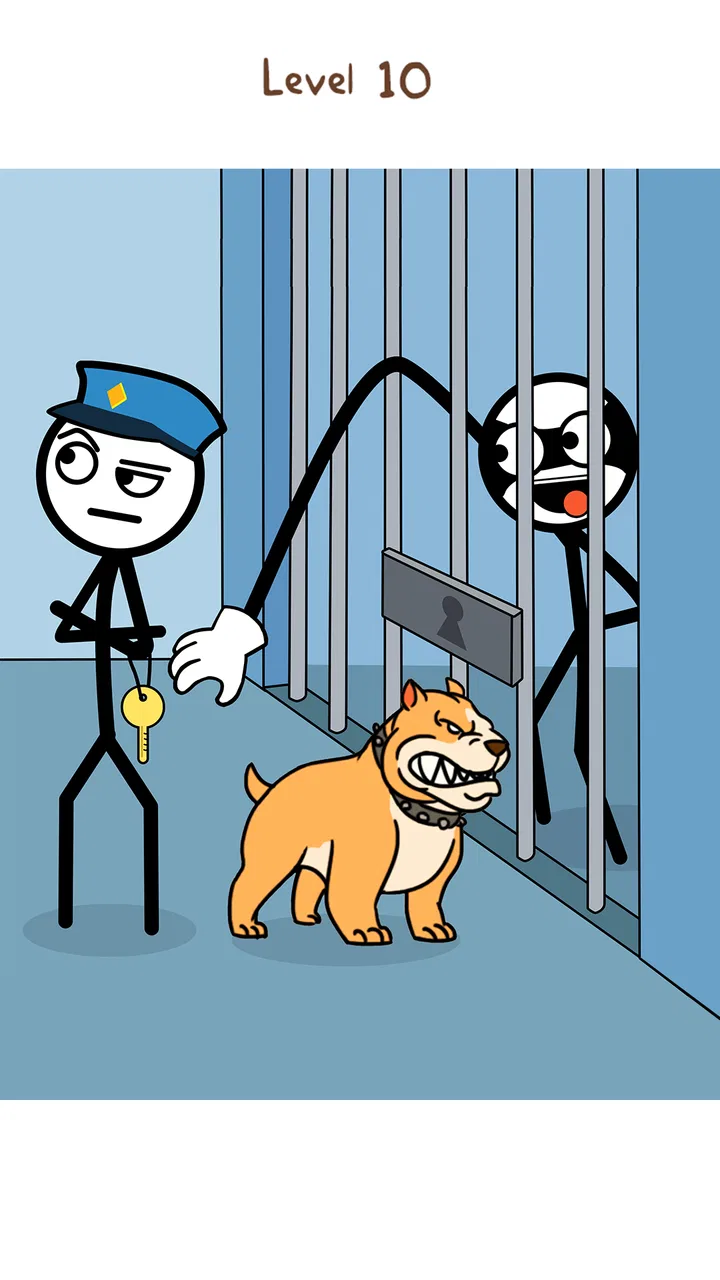
I approached Thief Puzzle expecting a quick casual game, and that is exactly where it fits best. It is a puzzle game from TapNation built around short situations in which I had to work out how a thief could reach an objective without being stopped by the obstacles on screen. The appeal is immediate: each level presents a small visual problem, and the solution usually depends more on noticing the right detail than on mastering complicated controls.
The game is free to start and is rated for Everyone, so it is easy to recommend as a low-pressure option for a short break. It has also reached over 100 million installs and holds a 4.6 average from around 766 thousand ratings, which gives a useful indication of how widely this simple format has connected with mobile players. I would not treat those figures as a guarantee that every level will suit you, but they do match my impression that the game is designed to be approachable within seconds.
What the first few levels feel like
The opening experience is deliberately uncomplicated. I did not need to learn a long list of rules before attempting a puzzle. Instead, I could look at the scene, identify the target, and experiment with the thief’s reach. That makes the first meaningful success arrive quickly: the satisfying moment is not just completing a level, but realizing that the answer was visible all along.
You May Also Like

 AccuWeather: Weather Radar
AccuWeather Review: A Quick, Clear Forecast for Everyday Decisions
For everyday plans, the best forecast is the one you can understand quickly. AccuWeather makes rain timing, radar, and local conditions easy to act on, with a few trade-offs.

 Hill Climb Racing
Why Hill Climb Racing Still Turns Crashes Into One More Run
A tiny car, a bumpy hill and one more upgrade: Hill Climb Racing keeps resurfacing because its simple chaos makes every near-miss feel personal.

 AliExpress - Shopping App
AliExpress Makes Global Shopping Feel Personal, but Shoppers Bear the Risk
AliExpress turns a global marketplace into a pocket-sized discovery engine. Its reach is useful, its shopping loop compelling, and its trade-offs easy to miss.

 Lords Mobile: Kingdom Wars
Lords Mobile Is a Kingdom-Building Routine, Not a Quick Match
A case-by-case verdict on the building, battles, device demands, and social commitments that make Lords Mobile rewarding for some players and exhausting for others.

 PDF Scanner app - TapScanner
TapScanner Makes Paperwork Easier to Capture, Check, and Share
TapScanner makes scanning with a phone feel less like a rescue operation and more like a dependable step in getting work done. Its capture tools are useful, though not flawless.

 Block Blast!
 Shows How Much a Puzzle Game Can Leave Out
A quiet grid game shows why puzzle players increasingly value instant clarity, repeatable skill and low-pressure play—and where the genre still needs to catch up.
More From Our News Desk
View All News


That visual simplicity is important. Thief Puzzle is not trying to imitate a traditional logic game with grids, equations, or lengthy written clues. Its challenges are closer to small cartoon scenes that ask me to interpret what I see. A character, an object, and an obstacle can combine in a way that makes the correct action feel funny once I understand it.
My advice to a first-time player is to resist tapping randomly. Start by scanning the whole screen. Look at the object you are meant to take, the route between the thief and that object, and anything that could interrupt the attempt. The game rewards observation more than speed, so a calm first look is often more useful than several hurried gestures.
The short format also makes the game suitable for everyday moments. I can play a few levels while waiting for an appointment or during a brief commute, then stop without losing the feeling of progress. It does not demand the long concentration of a complex strategy game, although players who prefer deep, consistent logic may eventually find its lighter presentation too loose.
Installing and getting comfortable
The game runs on Android devices using version 7.0 or later, and the current version is 2.3.4. Once installed, the most reassuring part of the setup is that there is no need to prepare a profile or understand a complicated menu before trying the core activity. I can move from opening the game to attempting a puzzle with very little friction.
Because it is free, the initial decision is straightforward: install it, try the opening levels, and decide whether the style suits you. There are in-app purchases ranging from $0.99 to $10.99 per item, so I would keep that in mind if the device is shared with a child. The Everyone rating makes the presentation broadly accessible, but the presence of optional purchases is still worth remembering when handing over a phone or tablet.
The first setup is best treated as a test of fit rather than a commitment. If you enjoy visual riddles, playful situations, and quick attempts, you will probably understand the attraction almost immediately. If you are looking for a story-driven heist, detailed planning, or a competitive puzzle system, the opening moments will also reveal that this is not the kind of thief game you may have imagined.
How to make the first successful move
When I reach a new level, I use a simple three-step routine. First, I identify the obvious goal. Second, I trace the most direct path from the thief to that goal. Third, I inspect what the hand or arm would encounter along that path. This prevents me from treating each puzzle as a guessing game and turns the screen into a small problem I can break down.
The most useful habit is to think about the entire reach rather than only the destination. A target may look close, but an obstacle positioned between the character and the object can make a straight attempt fail. Conversely, something that appears decorative may be the key clue. I found that pausing for a moment to compare foreground and background details often saved more time than repeated failed attempts.
For a realistic everyday example, imagine opening the game while waiting for coffee. I might have only five minutes, so I would not want a level that requires a long chain of instructions. Here, I can examine one scene, try a deliberate action, and either enjoy the result or restart my thinking without losing a large block of progress. That makes the game particularly comfortable for fragmented free time.
A second useful technique is to change the question I am asking. Instead of thinking, “What should I tap?” I ask, “What must the thief avoid?” That shift is surprisingly effective because many puzzles are built around the obstruction rather than the prize. Once I understand the danger or barrier, the route to the solution becomes easier to see.
I also avoid assuming that the funniest-looking object is automatically the answer. The cartoon presentation encourages quick reactions, but the correct move can depend on a less prominent part of the scene. I look for relationships: what is connected, what is blocking the route, and which element changes the situation when touched or reached.
Where new players commonly get stuck
The first source of confusion is expecting every level to use the same visual logic. Some scenes invite a direct approach, while others require me to notice that the obvious route is deliberately unsafe or ineffective. When a familiar action stops working, I do not immediately blame the controls. I go back to the scene and check whether I have misunderstood the goal.
Another common mistake is moving too quickly because the puzzle looks easy. The controls may be simple, but simple controls do not mean that every answer is automatic. A fast tap can feel like a failed attempt when the real issue is that I never inspected the complete path. Slowing down for a few seconds is usually the better strategy.
It is also easy to confuse humor with randomness. The situations are playful, but that does not mean the solution is arbitrary. I get better results when I treat the animation and visual exaggeration as clues. If an object is placed prominently, or if a character is positioned in an unusual way, I assume it may matter before I dismiss it as decoration.
When I genuinely cannot see the answer, I use a controlled reset in my thinking rather than trying every possible action. I name the goal, ignore the joke for a moment, and inspect the shortest possible route. Then I ask which single element prevents that route. This approach is more reliable than tapping across the entire screen and helps preserve the puzzle’s sense of discovery.
Some players may also wonder whether the game is suitable for children. Its Everyone content rating and cartoon puzzle format make it broadly approachable, and the controls are easy to understand. Still, I would supervise purchases on a shared device because free games with optional items can create a different experience for a child than for an adult playing alone.
What changes as I keep playing
The main progression comes from learning how the game wants me to observe. Early success can make me overconfident, because a few obvious solutions encourage quick tapping. Later, the better approach is to pause, read the scene, and test the most plausible action. The challenge is less about complicated mechanics and more about adapting my attention from one visual setup to the next.
That makes Thief Puzzle a good fit for players who enjoy bite-sized brain teasers but do not want a heavy interface. It is also a reasonable introduction to puzzle games for someone who normally avoids them. A beginner can understand the objective without studying a tutorial, while a more experienced player can still enjoy the small satisfaction of spotting a hidden relationship.
On the other hand, I would not choose it as my main puzzle game if I wanted a carefully structured logic campaign. Compared with a traditional match-three title, it offers more interpretation and less repetitive board management. Compared with a word puzzle, it depends on visual reasoning rather than vocabulary. Compared with a serious escape-room game, it is lighter, faster, and more playful, but it does not provide the same depth or atmosphere.
That comparison explains both its strength and its limitation. The game is excellent when I want a quick puzzle with a clear visual punchline. It is less convincing when I want solutions that build into a large system of rules or require extended planning. I would keep it alongside a deeper puzzle game rather than expecting it to replace every other style.
The trade-off between free access and interruptions
The free entry point is one of the reasons I can recommend trying it without much hesitation. I can discover whether the basic puzzle loop works for me before spending anything. The trade-off is that optional purchases exist, and players who dislike any commercial prompts may find the surrounding experience less comfortable than a paid, self-contained puzzle title.
I would also avoid judging the whole game from one frustrating level. A puzzle that feels obvious after the solution is revealed can be irritating beforehand, especially when the scene contains several plausible actions. If I am playing while tired, I may interpret a small visual distinction as unfair. In that situation, taking a break is more helpful than repeatedly forcing the same idea.
The game’s broad popularity, with more than 100 million installs and thousands of reviews, suggests that its accessible format works for a large audience. Yet that reach should not hide the personal trade-off: the same simplicity that makes it welcoming can make it feel shallow to someone who wants complex deduction. I would recommend it based on the kind of attention you want to use, not simply on its popularity.
Who should try it, and who should skip it
I think it is a strong choice for casual players, families looking for an easy shared game, and anyone who enjoys solving a small visual problem in under a few minutes. It is especially useful for filling short gaps in the day because the central action is immediately understandable and does not require a long session.
I would be more cautious about recommending it to players who need precise, predictable rules, a substantial narrative, or a genuinely demanding long-term challenge. If your favorite puzzle games involve elaborate deduction trees, carefully balanced difficulty, or competitive scoring, this may feel more like a collection of comic situations than a serious test of logic.
It is also not my first choice for someone who wants a completely distraction-free experience. A paid puzzle alternative may be better for that person, especially if avoiding optional purchases matters more than getting free access. Thief Puzzle makes the most sense when convenience, accessibility, and quick amusement are the priorities.
My practical route from installation to regular play
For a new player, I would begin by completing the first few levels without looking for outside help. The point is to learn the visual language: identify the target, inspect the route, and notice what blocks the obvious action. That early practice makes later scenes feel less mysterious because I am learning a method rather than memorizing isolated answers.
After that, I would play in short groups instead of rushing through a long session. A few levels at a time keeps the humor fresh and makes it easier to notice when frustration is coming from fatigue rather than difficulty. If a puzzle stops making sense, I would put the phone down briefly and return with a clean view of the scene.
I would also keep the purchase settings in mind before letting another person use the device. The game is free, but optional items can cost from $0.99 to $10.99 each. That does not prevent me from recommending it, but it changes how I would set it up for a child or on a shared phone.
TapNation has kept the package focused on the central appeal: quick creative heist puzzles that ask me to outthink the situation rather than manage a complicated character. The current version, 2.3.4, is the one I would use when starting now, and the Android requirement of 7.0 or later keeps the basic compatibility threshold fairly familiar for many devices.
My final recommendation
After spending time with Thief Puzzle, I see it as a friendly, visual puzzle game rather than a deep heist simulation. Its best moments come when I stop tapping, study the scene, and suddenly understand why the solution works. That small flash of recognition is enough to make another level feel worthwhile, particularly when I only have a few spare minutes.
I recommend it to first-time puzzle players and to anyone who wants a light game that can be picked up quickly. The free price, Everyone rating, simple controls, and broad availability make the first step reassuring. Just remember that optional purchases are part of the experience, and that its playful simplicity will not satisfy everyone.
My honest advice is to install it with modest expectations, give the opening puzzles your full attention, and judge it by how much you enjoy observing rather than how much complexity you want. If you like visual tricks, short attempts, and the satisfaction of finding the overlooked detail, it is an easy game to keep nearby. If you prefer long-form logic or a richer alternative in the puzzle category, choose a more structured title instead. For quick, cheerful problem-solving, though, Thief Puzzle earns my recommendation.
FAQs for Thief Puzzle: to pass a level
01What is the main objective of Thief Puzzle: to pass a level?
Thief Puzzle: to pass a level is a puzzle game where players take on the role of a clever thief trying to steal various items. The main objective is to solve each puzzle by figuring out how to grab the target object without getting caught. The game challenges your problem-solving skills with increasing difficulty as you progress.
02Are there any in-app purchases or ads in Thief Puzzle?
Yes, Thief Puzzle: to pass a level includes both in-app purchases and ads. These purchases typically offer hints or additional levels, enhancing the gameplay experience. Ads can appear between levels, but players often have the option to remove them through a one-time purchase, thereby improving the overall gaming experience.
03What makes Thief Puzzle different from other puzzle games?
Thief Puzzle stands out due to its unique theme and creative level design. Unlike traditional puzzle games, it combines elements of stealth and strategy, requiring players to think like a thief. Each level is a clever test of wit, requiring players to navigate imaginative scenarios and solve puzzles that are both challenging and entertaining.
04Is Thief Puzzle suitable for all ages?
Thief Puzzle is generally suitable for a wide range of ages, from young teens to adults. The game’s content is light-hearted and fun, with no inappropriate material. However, younger children might find some puzzles challenging without assistance. Parents may want to supervise to offer hints or guidance where necessary.
05Can Thief Puzzle be played offline?
Yes, Thief Puzzle: to pass a level can be played offline, making it a great option for entertainment on the go. While an internet connection is required for downloading the game and accessing certain features like in-app purchases or ads, the core gameplay is fully accessible without being connected to the internet.
Pros
- Engaging and challenging puzzles.
- Simple and intuitive controls.
- Variety of levels keeps it fresh.
- Fun graphics and animations.
- No forced ads interrupting gameplay.
Cons
- Limited hints can be frustrating.
- Some puzzles feel repetitive.
- Occasional glitches in gameplay.
- Ads can be frequent if not skipped.
- Levels can be too easy for some.

Thief Puzzle: to pass a level
Gallery